Transform Your Backyard: The Complete Guide to Concrete Patios and Outdoor Living Spaces in Knoxville, TN
Your backyard has potential you probably haven't tapped into yet. Whether you're looking at a bare patch of grass, an aging wooden deck, or a cracked slab that's seen better days, a well-designed concrete patio can turn underused outdoor space into the most popular room in your house, even though it doesn't have walls.
At JNM Construction, we've helped homeowners across Knoxville and East Tennessee create outdoor living spaces that hold up to our unique climate while looking great year after year. In this guide, we'll walk you through everything you need to know about planning, designing, and building a concrete patio that fits your lifestyle and your property.
Why Concrete Is the Best Foundation for Outdoor Living
When it comes to patio materials, homeowners have options: pavers, natural stone, wood decking, gravel, and more. But concrete continues to dominate for good reason, especially here in East Tennessee.
Concrete offers unmatched durability for the price. A properly poured and finished concrete patio can last 25 to 30 years or longer with minimal maintenance. Compare that to a wooden deck that needs staining and sealing every couple of years, or pavers that shift and settle over time, and the long-term value becomes clear.
Concrete also handles East Tennessee's climate well. Our region sees everything from summer heat and humidity to winter freeze-thaw cycles, heavy spring rains, and the occasional ice storm. Concrete stands up to all of it when it's installed correctly with the right mix, proper drainage, and adequate reinforcement. That combination of weather resistance and longevity makes it the foundation of choice for serious outdoor living projects.
Then there's versatility. Modern concrete isn't the plain gray slab your grandparents poured. Today's finishing options, including stamped patterns, exposed aggregate, colored concrete, acid staining, and decorative borders, mean your patio can complement any architectural style, from a rustic farmhouse in Maryville to a modern home in West Knoxville.
Planning Your Patio: What to Think About Before You Pour
A successful patio project starts well before the concrete truck arrives. Here are the key decisions you'll need to make during the planning phase.
Size and Layout
Think about how you actually want to use the space. A small patio for a bistro table and two chairs needs about 100 square feet. A full outdoor dining area for six to eight people requires closer to 250 to 300 square feet. If you're envisioning a multi-zone space with areas for dining, lounging, and cooking, you could be looking at 400 square feet or more.
Don't forget to account for traffic flow. You'll want clear paths between zones and enough room to pull out chairs, walk around furniture, and move freely without feeling cramped. A common mistake is building a patio that looks generous on paper but feels tight once the furniture goes in.
Location and Orientation
Where you place your patio affects how much you'll actually use it. Consider sun exposure throughout the day. A west-facing patio gets intense afternoon sun in the summer, which can make it uncomfortable without shade. East-facing patios catch the morning light and stay cooler in the evening, making them ideal for after-work relaxation.
Also think about proximity to your kitchen. If you plan to grill or entertain, having a short path between your indoor kitchen and your outdoor space makes a big difference. Nobody wants to carry plates and drinks across the entire yard.
Drainage
This is where a lot of DIY projects and inexperienced contractors get into trouble. East Tennessee gets an average of about 47 inches of rain per year, and Knoxville's clay-heavy soil doesn't absorb water quickly. If your patio doesn't have a proper slope (typically a minimum of one-eighth inch per foot away from your home's foundation) you'll end up with standing water, erosion around the edges, and potential damage to your foundation.
At JNM Construction, drainage planning is baked into every project from day one. We evaluate the existing grade of your property, plan appropriate slopes, and integrate solutions like channel drains or French drains when the terrain demands it.
Permits and HOA Requirements
Most standalone patio projects in Knox County don't require a building permit, but there are exceptions. If your patio connects to a structure, involves significant grading, or affects drainage patterns on neighboring properties, you may need approval. And if you live in a neighborhood with a homeowners association, always check the covenants before finalizing your design. It's much easier to adjust plans on paper than to tear out freshly poured concrete.
Design Ideas That Elevate Your Outdoor Space
A concrete patio is just the starting point. The real magic happens when you combine a solid foundation with thoughtful design elements that create a true outdoor living area.
Stamped Concrete Patterns
Stamped concrete allows you to mimic the look of more expensive materials at a fraction of the cost. Popular patterns in the Knoxville area include natural stone, slate, brick, and wood plank designs. When paired with integral color or a surface-applied stain, stamped concrete is nearly indistinguishable from the real thing, but it requires far less maintenance and won't shift or settle like individual pavers.
Outdoor Kitchens and Grill Stations
East Tennesseans love to cook outdoors, and a concrete patio is the perfect platform for an outdoor kitchen. Concrete provides a level, fireproof surface for built-in grills, smokers, countertops, and pizza ovens. A masonry base built with block or stone gives the kitchen structure and a polished look, while the concrete pad underneath handles grease, spills, and heavy equipment without flinching.
If a full outdoor kitchen is beyond your budget, a simple grill station with a concrete countertop and some storage space can be just as functional. Start with the essentials and expand over time as your budget allows.
Fire Pits and Seating Areas
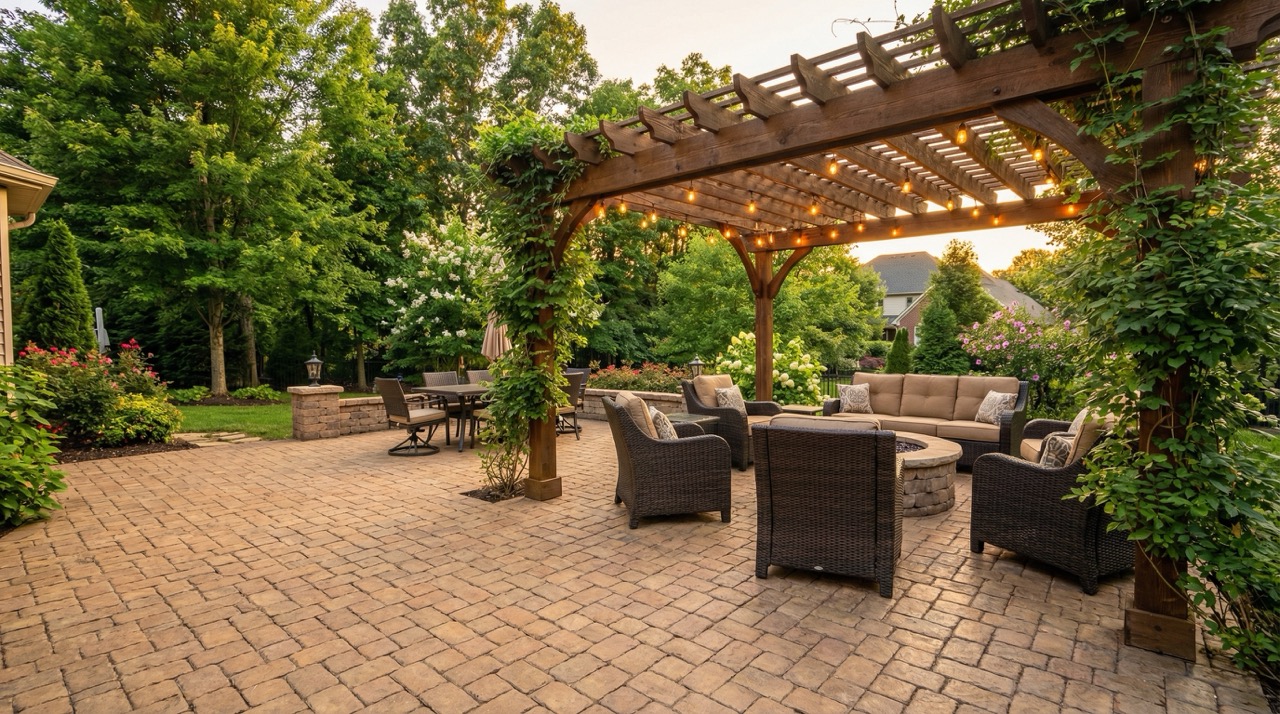
Nothing extends patio season like a fire pit. In Knoxville, a fire pit can add two to three months of comfortable outdoor use in the fall and early spring. Whether you prefer a built-in masonry fire pit or a simple portable unit on a reinforced concrete pad, the key is proper placement, at least 10 feet from any structure and away from overhanging branches.
Pair your fire pit with a curved concrete seating wall for built-in seating that never needs cushions replaced or furniture dragged in before a storm. Seating walls also do double duty as retaining structures on sloped lots, which are common across East Tennessee's hilly terrain.
Multi-Level Patios
If your property has a slope (and in Knoxville, odds are good that it does) a multi-level patio can work with the terrain instead of fighting it. Connected by concrete steps or gentle transitions, multi-level designs create natural zones for different activities. The upper level might hold your dining area close to the house, while a lower level features a fire pit with a view of the yard.
Multi-level patios do require more excavation and structural planning, but the result is a custom space that feels intentional and integrated with your landscape rather than plopped on top of it.
Pergolas and Shade Structures
A concrete patio paired with a pergola or shade structure is the ultimate combination for Knoxville summers. The concrete pad provides a stable, level foundation for posts, and the overhead structure filters sunlight while still allowing airflow. Add some string lights or a ceiling fan, and you've created an outdoor room that's comfortable from April through October.
The Construction Process: What to Expect
Understanding what goes into building a concrete patio helps set expectations and ensures you're prepared for each phase of the project.
Site Preparation and Excavation
Every quality patio starts with proper excavation. We remove topsoil and organic material, then excavate to the correct depth, typically six to eight inches below the finished grade to allow for a compacted gravel base and the concrete slab itself. For larger patios or areas with unstable soil, we may go deeper and add additional base material.
This is also when we address any drainage issues, reroute downspouts if needed, and establish the final grades and slopes that will keep water moving away from your home.
Base and Reinforcement
A compacted gravel base, usually four inches of crushed limestone, provides a stable, well-draining layer beneath the slab. We compact this base with mechanical equipment to prevent settling, then install reinforcement. Depending on the project, this could be wire mesh, rebar, or a combination of both.
Reinforcement doesn't prevent cracking entirely. Concrete will develop some hairline cracks over time as part of its natural curing process, but it holds the slab together and prevents pieces from shifting if cracks do form. We also place control joints at strategic intervals to guide where cracks occur, keeping them neat and predictable rather than random.
Pouring and Finishing
Once the base and reinforcement are in place, the concrete is poured, screeded to level, and finished according to your chosen design. A standard broom finish provides reliable traction and a clean look. Stamped and decorative finishes require additional steps, including applying color hardener, release agents, and stamp mats while the concrete is still workable.
Timing is everything during the pour. Concrete waits for no one, and our experienced crew knows how to manage the process efficiently, especially during East Tennessee's hot summers when concrete sets faster than you'd expect.
Curing
After the pour, concrete needs time to cure, a minimum of seven days before light foot traffic and 28 days before placing heavy furniture or equipment. We apply a curing compound to help the concrete retain moisture during this critical period, which ensures it reaches its full strength and durability.
Maintaining Your Concrete Patio
One of the best things about a concrete patio is how little maintenance it requires. Here are a few simple steps to keep it looking great for decades.
Keep it clean by sweeping regularly and power washing once or twice a year to remove dirt, mildew, and stains. For stamped or stained concrete, apply a fresh coat of sealer every two to three years to maintain the color and protect the surface from UV exposure and moisture. Address cracks early. Small cracks can be filled with a concrete caulk or patching compound before they become bigger problems. And always make sure your drainage is working properly, especially after heavy rains or during the spring thaw.
Ready to Build Your Outdoor Living Space?
A concrete patio is one of the best investments you can make in your Knoxville home. It adds usable living space, increases property value, and creates a place where your family and friends will want to gather for years to come.
At JNM Construction, we bring the full package, including concrete expertise, masonry craftsmanship, and excavation capabilities, to every outdoor living project we take on. From the initial grading and site prep to the final finish, everything is handled by our experienced, local crew who understand East Tennessee's soil, climate, and building requirements.
Ready to transform your backyard? Contact JNM Construction today at (865) 684-6612 or visit jnmconstructionllc.com to schedule your free quote. Let's build something you'll enjoy for decades.
.jpg)